


VHF MARINE RADIO (SRC) - SHORT RANGE CERTIFICATE
Your Essential Certification for Safe Marine VHF Communication. Operational from January 2027.
VHF MARINE RADIO (SRC) - SHORT RANGE CERTIFICATE
Learn to use your marine VHF radio with confidence
The RYA Short Range Certificate (SRC) is the internationally recognised qualification for operating a marine VHF radio with Digital Selective Calling (DSC).
Our course combines online learning, which can be completed from home, followed by a full day of practical training at our training centre in Scheveningen. You will learn how to use both fixed and handheld VHF radios, communicate effectively on international channels, and respond correctly in routine, safety and emergency situations. The course concludes with the RYA SRC examination, conducted by an RYA assessor at our training centre.
What you will learn
By the end of the course, you will be able to:
- Make routine calls to marinas, ports and other vessels
- Use Digital Selective Calling (DSC)
- Make distress and urgency calls correctly
- Respond appropriately to Mayday, Pan Pan and Securité situations
- Understand the use of marine VHF channels and frequencies
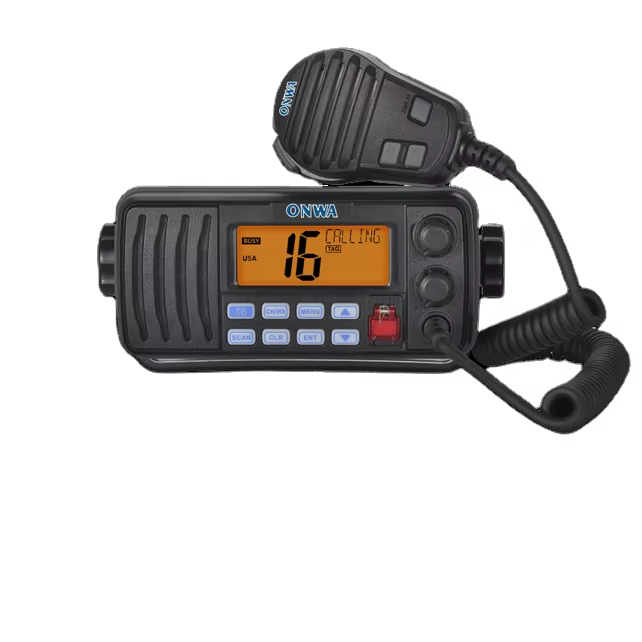
- Use both fixed and handheld VHF equipment
- Understand key GMDSS safety equipment, including EPIRBs, PLBs and SARTs
- Follow the correct procedures for emergency and safety communications
Course Programme
- Online preparation
Before attending the practical day, you will complete the online SRC course and pre-course learning from home. You will also be asked for example to learn the NATO phonetic alphabet before attending.
Allow approximately 10–15 hours to complete the online course, including the exam
- Full-day practical training
You will then attend a full day of practical training at our training centre in Scheveningen. You will need to bring your on line training certificate.
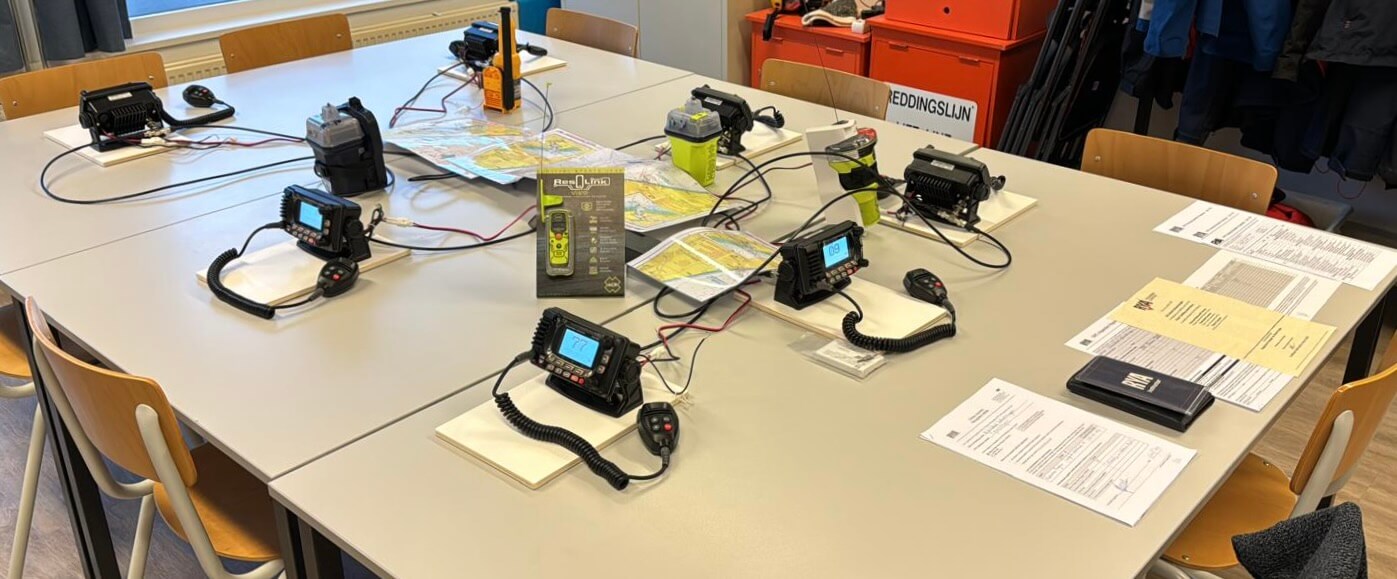
The day combines theory with hands-on exercises using training VHF radios and simulators, giving you the opportunity to practise the procedures you will need in real situations.
- RYA SRC examination
At the end of the practical training day, you will complete the RYA SRC examination with an RYA SRC assessor. The assessment consists of a written theory assessment and a practical assessment.
Written Theory Assessment
A 30-minute closed-book assessment consisting of multiple-choice and short-answer questions covering areas such as:
- Distress and emergency procedures
- GMDSS equipment and procedures
- VHF radio channels and frequencies
- DSC
- Relevant rules and legal requirements
Practical Assessment
A hands-on assessment using training and simulator radios. You will be asked to demonstrate your ability to:
- Send a routine DSC alert
- Make voice calls
- Use the radio correctly in different situations
- Carry out emergency procedures, including Mayday, Pan Pan and Securité calls
The course is delivered in English. Participants should therefore have a basic understanding of English so that they can follow the instruction, understand the course materials and participate in the exercises.
Who can take the course?
- Minimum age: 16 years
- No previous VHF certification or experience is required
- You must complete the required pre-course on line training before attending the practical day
For the online training, you will need one of the following equipment and technical requirements:
- PC: Windows 10 or later with the latest version of Microsoft Edge, Google Chrome or Firefox
- Mac: macOS 10.13 or later with the latest version of Safari, Google Chrome or Firefox
- iPad: iOS 11 or later using Safari
- Android tablet: Android 4.1 or later using Google Chrome
We recommend using a computer or tablet with a reliable internet connection for the online course.
What is included in your course fee of € 295,-
- Online SRC course + Full day of practical training at our training centre in Scheveningen
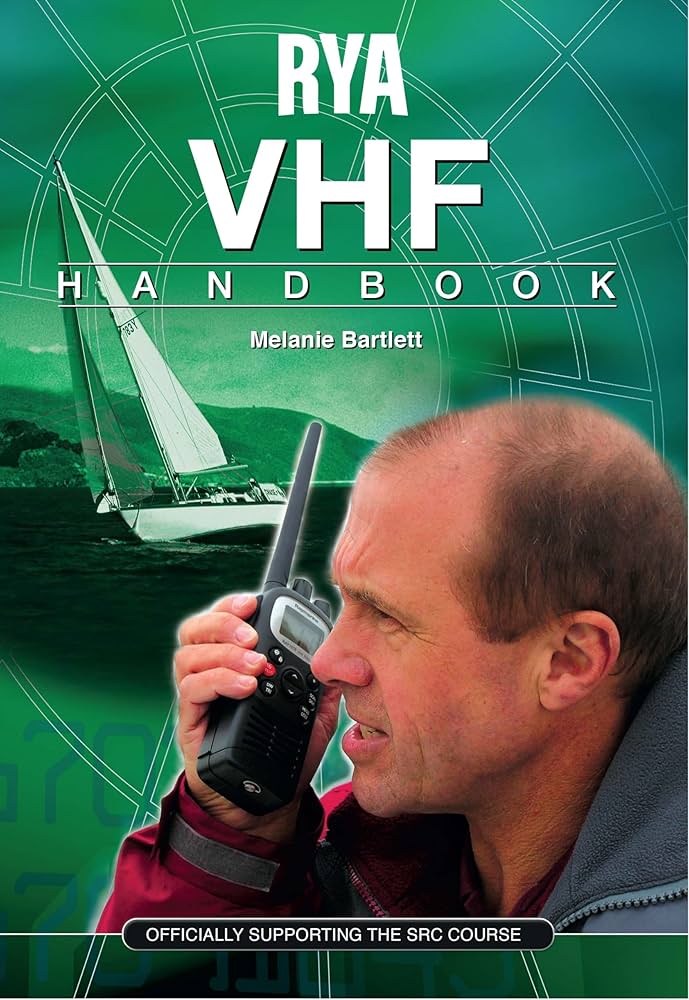
- Hard-copy RYA VHF handbook, delivered to your home address
- RYA SRC examination at the end of the practical training day, conducted by an RYA SRC assessor
- 21% VAT
- Free parking until 18:00
- Coffee, tea and stroopwafels
What is not included in your course fee
- RYA examination fee: € 97,- . (We will take care of the payment to the RYA for you)
- Transportation or travel to our training centre
- Passport-sized photograph
- Lunch is not included.
As this course takes place inside all day, we encourage you to get some fresh air, and choose from the many nearby cafés, snack bars, and supermarkets.
There are no other hidden costs to be paid.
After the course
Once you have successfully completed the examination, your SRC certificate will be processed by the RYA.
Please allow sufficient time for the administration and certification process. The RYA may take approximately 4–6 weeks to process the paperwork and issue the certificate.
Costs VHF Marine Radio Course
Included in your course fee of € 295,-
- Online SRC course + Full day of practical training at our training centre in Scheveningen
- Hard-copy RYA VHF handbook, delivered to your home address
- RYA SRC examination at the end of the practical training day, conducted by an RYA SRC assessor
- 21% VAT
- Free parking until 18:00
- Coffee, tea and stroopwafels
Not included in your course fee
- RYA examination fee: € 97,- We will take care of the payment to the RYA for you.
- Lunch. As this course takes place inside all day, we encourage you to get some fresh air, and choose from the many nearby cafés, snack bars, and supermarkets.
- Transportation or travel to our training centre
- Passport-sized photograph
There are no other hidden costs to be paid.
Program VHF MARINE RADIO (SRC) Course
Day 1
What to bring with you?
- Valid identity card
- Passport sized photograph (write your name and date of birth on the back)
- The online course certificate
- A pen and some paper so you can take notes. Digital note-taking is also welcome
- You can bring your own lunch or grab something to eat at a nearby snack bar, café, or supermarket.
Book now
- General
-
VHF MARINE RADIO (SRC) - SHORT RANGE CERTIFICATE
Learn to use your marine VHF radio with confidence
The RYA Short Range Certificate (SRC) is the internationally recognised qualification for operating a marine VHF radio with Digital Selective Calling (DSC).
Our course combines online learning, which can be completed from home, followed by a full day of practical training at our training centre in Scheveningen. You will learn how to use both fixed and handheld VHF radios, communicate effectively on international channels, and respond correctly in routine, safety and emergency situations. The course concludes with the RYA SRC examination, conducted by an RYA assessor at our training centre.
What you will learn
By the end of the course, you will be able to:
- Make routine calls to marinas, ports and other vessels
- Use Digital Selective Calling (DSC)
- Make distress and urgency calls correctly
- Respond appropriately to Mayday, Pan Pan and Securité situations
- Understand the use of marine VHF channels and frequencies
- Use both fixed and handheld VHF equipment
- Understand key GMDSS safety equipment, including EPIRBs, PLBs and SARTs
- Follow the correct procedures for emergency and safety communications
Course Programme
- Online preparation
Before attending the practical day, you will complete the online SRC course and pre-course learning from home. You will also be asked for example to learn the NATO phonetic alphabet before attending.
Allow approximately 10–15 hours to complete the online course, including the exam- Full-day practical training
You will then attend a full day of practical training at our training centre in Scheveningen. You will need to bring your on line training certificate.
The day combines theory with hands-on exercises using training VHF radios and simulators, giving you the opportunity to practise the procedures you will need in real situations.- RYA SRC examination
At the end of the practical training day, you will complete the RYA SRC examination with an RYA SRC assessor. The assessment consists of a written theory assessment and a practical assessment.
Written Theory Assessment
A 30-minute closed-book assessment consisting of multiple-choice and short-answer questions covering areas such as:
- Distress and emergency procedures
- GMDSS equipment and procedures
- VHF radio channels and frequencies
- DSC
- Relevant rules and legal requirements
Practical Assessment
A hands-on assessment using training and simulator radios. You will be asked to demonstrate your ability to:
- Send a routine DSC alert
- Make voice calls
- Use the radio correctly in different situations
- Carry out emergency procedures, including Mayday, Pan Pan and Securité calls
The course is delivered in English. Participants should therefore have a basic understanding of English so that they can follow the instruction, understand the course materials and participate in the exercises.
Who can take the course?
- Minimum age: 16 years
- No previous VHF certification or experience is required
- You must complete the required pre-course on line training before attending the practical day
For the online training, you will need one of the following equipment and technical requirements:
- PC: Windows 10 or later with the latest version of Microsoft Edge, Google Chrome or Firefox
- Mac: macOS 10.13 or later with the latest version of Safari, Google Chrome or Firefox
- iPad: iOS 11 or later using Safari
- Android tablet: Android 4.1 or later using Google Chrome
We recommend using a computer or tablet with a reliable internet connection for the online course.
What is included in your course fee of € 295,-
- Online SRC course + Full day of practical training at our training centre in Scheveningen
- Hard-copy RYA VHF handbook, delivered to your home address
- RYA SRC examination at the end of the practical training day, conducted by an RYA SRC assessor
- 21% VAT
- Free parking until 18:00
- Coffee, tea and stroopwafels
What is not included in your course fee
- RYA examination fee: € 97,- . (We will take care of the payment to the RYA for you)
- Transportation or travel to our training centre
- Passport-sized photograph
- Lunch is not included.
As this course takes place inside all day, we encourage you to get some fresh air, and choose from the many nearby cafés, snack bars, and supermarkets.
There are no other hidden costs to be paid.
After the course
Once you have successfully completed the examination, your SRC certificate will be processed by the RYA.
Please allow sufficient time for the administration and certification process. The RYA may take approximately 4–6 weeks to process the paperwork and issue the certificate.
- COSTS
-
Costs VHF Marine Radio Course
Included in your course fee of € 295,-
- Online SRC course + Full day of practical training at our training centre in Scheveningen
- Hard-copy RYA VHF handbook, delivered to your home address
- RYA SRC examination at the end of the practical training day, conducted by an RYA SRC assessor
- 21% VAT
- Free parking until 18:00
- Coffee, tea and stroopwafels
Not included in your course fee
- RYA examination fee: € 97,- We will take care of the payment to the RYA for you.
- Lunch. As this course takes place inside all day, we encourage you to get some fresh air, and choose from the many nearby cafés, snack bars, and supermarkets.
- Transportation or travel to our training centre
- Passport-sized photograph
There are no other hidden costs to be paid.
- PROGRAM
-
Program VHF MARINE RADIO (SRC) Course
Day 1
- WHAT TO BRING?
-
What to bring with you?
- Valid identity card
- Passport sized photograph (write your name and date of birth on the back)
- The online course certificate
- A pen and some paper so you can take notes. Digital note-taking is also welcome
- You can bring your own lunch or grab something to eat at a nearby snack bar, café, or supermarket.
- REGISTER
-
Book now